If you have a mailbox in Discovery Bay right now, you may have already seen the notice. A community meeting on August 28, and another on September 18, both at Delta Community Presbyterian Church on Willow Lake Road, both about the same thing: a proposed new property assessment from Reclamation District 800, the agency that keeps the levees around this community standing.
Here is what most of what you will read about this misses. The assessment is not a flat, one-size-fits-all number that every homeowner in Discovery Bay will pay equally. It is calculated parcel by parcel, based on which of four specific service areas actually benefit your property. Two homes a few doors apart, one on deep water and one set back on a former agricultural lot, could see genuinely different figures. If you are buying, selling, or already own here, that distinction matters more than the topline dollar amount.
The district behind the water you can't see from the street
Reclamation District 800 has been quietly doing this job for more than a century. The district traces back to a 1909 petition to Contra Costa County, and it now maintains roughly 19 miles of levees protecting the Byron Tract, the land beneath and around Discovery Bay. Beyond flood protection, RD 800 also manages water circulation and drainage in the community's lakes and lagoons, including Willow Lake, and reviews construction that happens on or near the levees and slopes. It is run by a five-member elected Board of Trustees and, until now, has operated on a comparatively modest annual budget funded by assessments, property taxes, and state reimbursements.
That modest budget is the whole reason this is happening now.
The gap that's driving the ballot
According to RD 800's own numbers, the district took in approximately $2 million in total revenue during fiscal year 2024-25. The true annual cost of doing its job, including levee maintenance, drainage, weed and water quality management, and dredging for navigation, comes to roughly $3.1567 million. That leaves a shortfall of about $1.567 million a year, every year, for as long as the gap goes unaddressed.
The district's proposed fix is a new annual property assessment designed to close that exact gap. If approved, it would raise $1.567 million in fiscal year 2026-27 and continue at that level afterward, with room to increase each year by the Consumer Price Index, capped at 4 percent, and only with a further vote of the Board of Trustees. By law, the money can only be spent on the four service areas it is tied to. Nothing gets diverted elsewhere.
The choice in front of property owners is straightforward on paper. Approve it, and new assessments start showing up on tax bills in fall 2026. Decline it, and the district says the deficit keeps growing, which it warns could mean deferred maintenance on levees and slower response to drainage and water quality problems over time. That is the district's stated case for the measure, not an independent prediction, but it is the framing every property owner in the service area is currently voting on.
Why your neighbor's number won't be yours
Here is the part that gets lost in most conversations about this. RD 800 has structured the proposed assessment around four distinct service areas, and by the district's own description, not every property benefits from all four. Most benefit from at least two. That means the calculation is not a flat per-home fee spread evenly across the community. It is closer to a formula, weighted by which services actually touch your specific parcel.
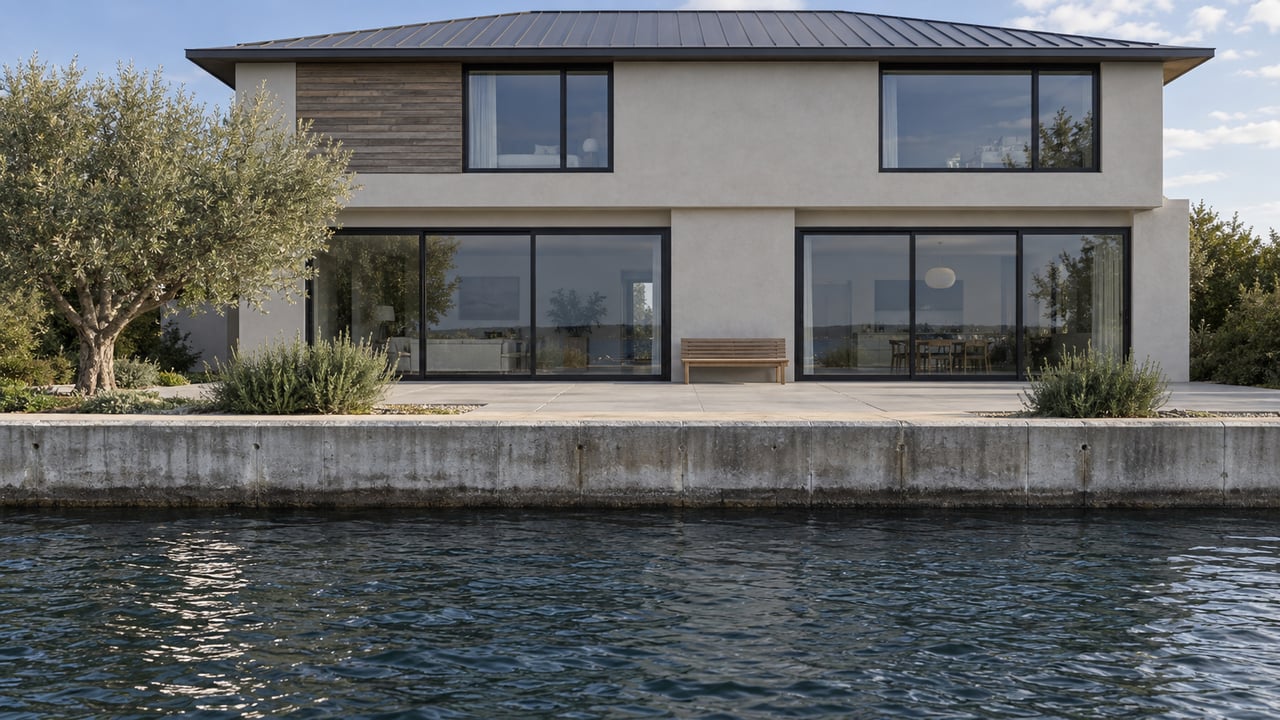
Discovery Bay's housing stock makes this concrete. The original canal system runs through communities like Lakeshore, Sandy Bay Isle, and Edgewater, where homes have private docks and direct navigable access to the Delta. The Lakes is a separate gated section built around man-made lakes, offering waterfront-style living without a direct Delta connection. Other sections of Discovery Bay sit on what was once agricultural land, with no canal frontage or dock infrastructure at all. A levee-adjacent, deep-water parcel in one of the canal neighborhoods draws on a different mix of RD 800's services than an interior lot with no water access, which is exactly why the district built a calculator rather than a flat fee. RD 800 publishes an Assessment Calculator that lets any property owner look up the specific benefit zones and proposed annual figure tied to their own parcel.
That is the number worth knowing before you write an offer or sign a listing agreement, not the district-wide average.
If you're listing this fall
A pending district-wide vote could add a new recurring line item to the tax bill. If your listing goes live before the outcome of this ballot is settled, the practical move is to pull your own parcel's number from RD 800's calculator now, rather than waiting for a buyer's agent to ask about it during the inspection period. A seller who can answer the question with a specific figure, tied to their own service areas, looks prepared. A seller who has to go look it up mid-escrow looks like they were caught off guard.
If you're buying or already under contract
Add one line to your due diligence list this season: pull the RD 800 assessment estimate for the exact parcel you are considering, not the neighborhood average, and not what the seller's neighbor is paying. Because the figure is benefit-zone specific, a home that looks identical in square footage and finish to the one two doors down can carry a different number once the four service areas are factored in. If your offer includes a standard contingency period, this is a five-minute check that belongs inside it. Ask your agent to confirm whether the seller has already looked this up, and get the figure in writing before you remove contingencies tied to cost of ownership.
FAQ
Is this a Mello-Roos tax? No. Mello-Roos assessments fund specific bond-financed infrastructure through a Community Facilities District. RD 800's proposal is a reclamation district assessment, a different legal mechanism tied to flood control and water management benefits, though both end up as line items on a property tax bill.
Does every home in Discovery Bay pay the same amount? No. The proposed assessment is calculated by benefit zone and service area, and RD 800 states that most properties benefit from at least two of its four service areas rather than all four equally.
Where do I find my own parcel's number? RD 800's Assessment Calculator lets property owners look up their specific service areas, benefit factors, and proposed annual assessment.
When would this actually show up on a tax bill? If approved, RD 800 states new assessments would first appear on property tax bills starting fall 2026 and continue annually after that.
Whether you are getting a home ready to list this fall or comparing parcels before you write an offer, the RD 800 number is a five-minute lookup that changes how a transaction gets priced and disclosed. If you want a second set of eyes on what a specific Discovery Bay property's benefit zone means for your plans, Deborah Maisterrena is happy to walk through it with you. Let's Connect.
This article is general information, not legal, tax or financial advice. Consult a qualified professional about your situation.